4 Big Bets For 2027 (Plus What Failed In 2026)
Everyone we talk to is working through the same challenge right now: where AI really helps, and where it gets in the way.
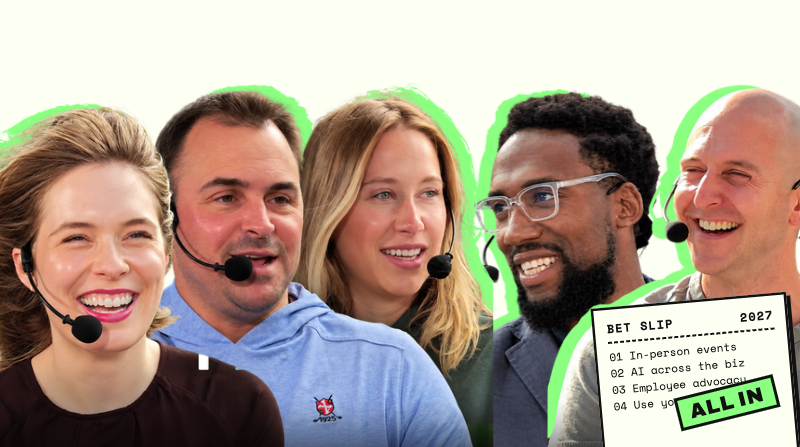
So it wasn’t a huge surprise that AI came up in every conversation. Dasha asked Ross Simmonds (Founder, Foundation Marketing), Casey Patterson (Director of NA ABM, Snowflake), Colin Kendall (CMO, SC&H), and as a bonus, me (Head of Thought Leadership at Exit Five) what worked in 2026. Here are the plays that came out of it.
1. Give Value to the Internet – It Will Return the Favor
Ross runs Foundation Marketing and Distribution.ai, and his rule is to create ridiculously good content once and distribute it forever. It’s how he built his career. While living in his parents’ basement in Nova Scotia, he wrote a blog post about marketing to Gen Z that got Bacardi to fly him to Miami to present to their C-suite. Ross built a whole business around that concept: one asset Foundation created for a client about three years ago is still cited by LLMs for top prompts in their category and still generates leads.
2026 win: Building the team. Ross’s proudest win this year was work he didn’t do himself. His Foundation team now goes into top brands, does best-in-class work on AI visibility, and turns it into pipeline without him. He hires by leading with Foundation’s values, being upfront about the cons, and giving people big problems to solve (plus an unlimited book budget). Now many of his team members are even better than him at Reddit and LinkedIn (his words!).
Leaving in 2026: He says brands should stop spamming Reddit. Ross is a big Redditor, and “you should buy my software” comments take value from a channel instead of giving it. That matters because Reddit is training data for LLMs like Gemini and influences billions of dollars in B2B deals. He says brands should be transparent and chime in only when they have something useful to add.
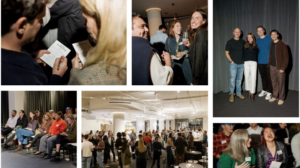
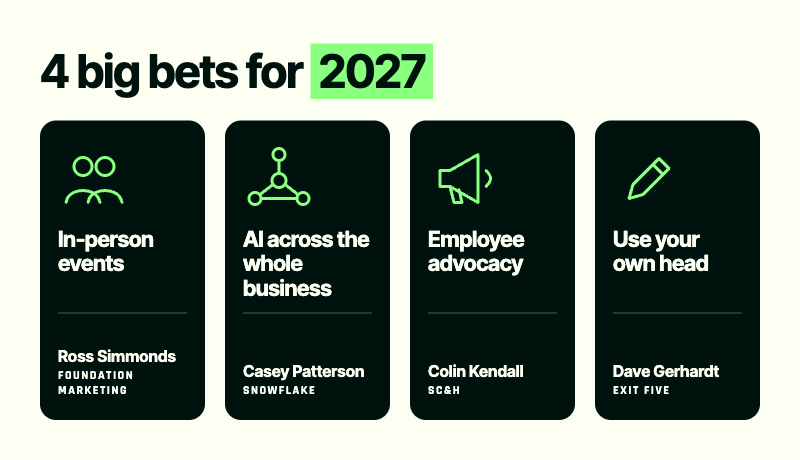
2027 bet: A surge of in-person events. Ross built his career online, but he thinks buyers want real connection now, which is why some top AI firms are hiring for community and events roles. As he put it, going from pixels to flesh.
2. Small Weekly Changes Beat One Huge AI Earthquake
Casey runs North American ABM at Snowflake with a team of about 20. She grew up in California fearing “the big one” on the San Andreas Fault, where small quakes are actually a relief because they release tension. She runs her team the same way, with small disruptions every week. Casey says it starts with her, because you can’t ask people to do things you’re not willing to do yourself.
2026 win: Snowflake’s AI accelerator program escalates the best projects to leadership for dedicated engineers. Example: a “database washing machine” that sorts contacts by what enrichment data each one needs to become marketable, since marketing data decays about 25% a year.
What she’s not leaving in 2026: The sales and marketing connection. With everything else changing, Casey says AI should never be an excuse to stop talking to sales one-on-one about the accounts they want to get into. Blame passing between the two teams doesn’t generate pipeline and constant collaboration is a must.
2027 bet: AI across the whole business and automating more workflows. In her words, it won’t be the same, but more, it’ll be different and better. This year they tested account-based billboards outside an account in Tulsa, Oklahoma, and CMO-to-CMO videos that call out the company by name, and those accounts have been reaching out to set up calls. (Yes, more of that please.)
3. Your Take Doesn’t Have To Be Unique, But It Has To Be Yours
Colin is CMO of SC&H, a consulting and financial services firm (think: a boutique Deloitte). Since they’re not a household name, he says they have to fight tooth and nail to build a brand and be memorable. His answer is putting SC&H’s own people and their points of view in front of buyers, on stage and online.
2026 win: Revenue from events. Instead of sponsoring a booth and hoping the right person stops by, his team gets SC&H’s people speaking. Stack those talks, and someone who’d never heard of you sees you in February, again in March, and adds up to four or five touchpoints. Now big companies are including SC&H in RFPs and reaching out directly.
Leaving in 2026: Letting AI write your thought leadership. He watched the pendulum swing from “I don’t need to be a writer, I’ll just put it into Claude” to everyone posting the exact same thing. So his team works with each firm to find who has a real point of view worth sharing, sometimes the leader and sometimes a first or second year employee.
2027 bet: Bigger investment in employee advocacy and personal branding for SC&H leaders, with more time, training, and budget. His team can help with ideas and confidence, but the leaders have to be the ones crafting it. This way, the person clients meet online matches the person they meet in real life.
4. Put Away Claude And Use Your Own Head
Okay, this one’s mine. I’m not running marketing at a big company, my job is to listen to marketing leaders like these three and test what I hear on our own business. Here’s my take.
2026 win: This is the best version of the Exit Five team we’ve had. I think most business problems are who problems, not how problems. We raised the bar on quality across everything we make. The newsletter went from repurposed LinkedIn posts to a real process built on other people’s voices, and our live sessions became a legitimate production. It’s the first year I really feel like we’re a serious media company.
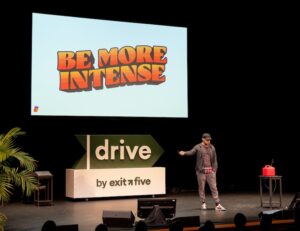
Leaving in 2026: Leaning on Claude to build my outline. In August I sat down to write my Drive keynote, couldn’t come up with anything, and honestly think AI rotted my brain a little. I enlisted the help of Harry Dry, who sent me a message back in all caps: DON’T EVER SEND ME AI SLOP AGAIN, put away Claude and get into your own head. He pushed me to show, don’t tell. It took me about 8 hours to write 2,000 words, and it might be the best thing I’ve written.
2027 bet: We’ll keep raising the bar on quality without losing authenticity. I’m also changing how I edit and provide feedback to my team. Instead of rewriting their drafts, I tell them what I’d like to see, like a better example or a different hook, and let them figure it out.
4 Different POVs, One Big Idea
Four very different jobs, and every answer came back to the same idea: use AI where it helps, and keep the people part human. That’s a big part of why we’re taking Exit Five on the road next year. See you there?