How To Find The Big Idea In Anything You Write
Writing my Drive 2026 keynote was the bane of my existence for the month leading up to the event. My first draft had no soul, and when I shared the outline with Harry, he laid into me. “Time to put away Claude and get into your own head. You’re Dave f***ing Gerhardt,” he told me. (I needed that.) What came out of it is the best thing I’ve ever written, and a good marketing lesson: great stories can be simple. You just need that one core idea. Here’s how Harry helped me find mine.
When you try to say everything, you say nothing
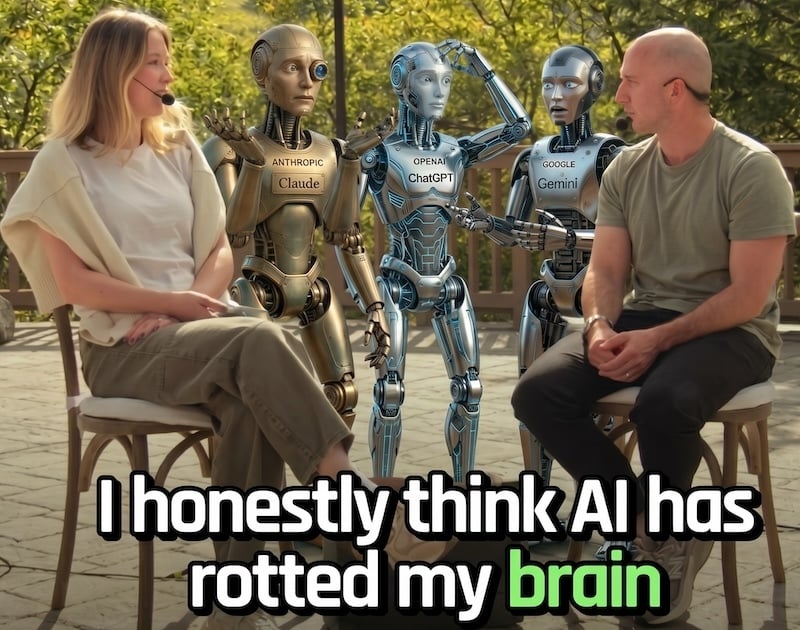
I’m usually the idea machine. I pride myself on never having writer’s block. But when August rolled around and I sat down to work on my slides, I could not think. I honestly think AI has rotted my brain. I’m not kidding, and I’m saying it because I think so many people can relate.
My default for anything has been Claude. So I did a bunch of work up front (a brief, examples, screenshots of conversations with Dan) and had Claude create my outline. I covered all the things I wanted to cover, but I couldn’t form an original thought about what I actually wanted to talk about.
The draft was okay, a totally fine “welcome to Drive” address, but not great. It was missing something, and Harry spotted it right away: “It has no conflict.”
No conflict, no story
Harry gave a great talk at Drive last year on the key to telling a great story: conflict. One of his best hooks was a video of Usain Bolt chasing a tiger – you instantly want to know what happens next. Another was Dasha’s first trip to hang out with the Exit Five team, when she drove down from Canada and got to the border late at night to find it closed. What was she gonna do?
My outline had no conflict, and Harry sent me a ton of feedback. Honestly, I didn’t like it. It was like a personal trainer telling you to stop eating pizza to lose belly fat. We know these things, but they’re hard to hear. Then he challenged me: what’s the story you’re trying to tell? We agreed that the best thing about Drive was connection, and that’s when my conflict emerged.
Back in my Drift days, we had a very in-office culture, and all these amazing things happened because we were surrounded by each other. Then everything went remote, and I took a new job as CMO. Between Zoom calls, Loom videos, and Slack, we lost the personal connection. Then AI came along and made it even worse. Why even talk to humans on Slack when I’ve got Claude in my pocket?
THAT’S the tension. The connection we lost to remote work and AI is exactly what makes Drive special. That’s the story. Now I had to refocus my whole talk on this core idea.
Get it down to one word. Then show it.
This is a timeless marketing lesson. At Drift, we simplified our whole positioning down to “no forms.” Harry helped me get my entire talk down to that one word: connection. His direction was to forget the AI stuff, speak from the heart, and tell the story of Dave Gerhardt. I met my wife, had hair (now I don’t), got married, changed jobs, had kids. How I used to tell stories before AI.
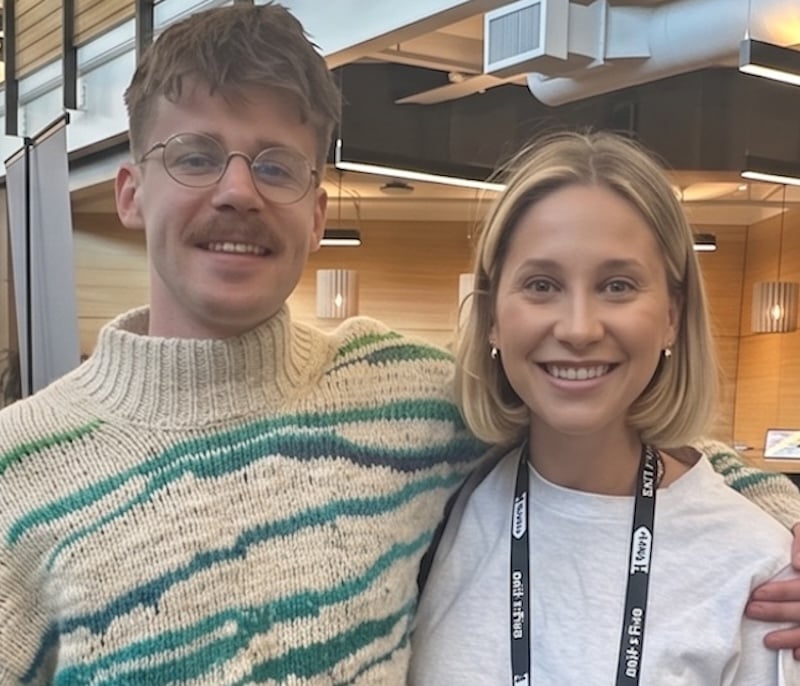
But Harry didn’t want me to tell people about connection – he wanted me to show it. If I said I met Dan, Harry said, Where? Sweetgreen on Boylston Street. What did you eat? A Harvest Bowl. Don’t say “I interviewed Dasha.” Say, “The sun was beating on my bald head, she was two feet away, and she told me she’d just seen a bear.”
My final deck was all photos from my camera roll from the last 10 years. It’s not some groundbreaking thing. It’s a real, personal story, with tension and conflict.
Then came the hardest part: cutting.
Cut until it’s a 9 or a 10
Harry’s bar was simple: keep editing until you feel it’s a 9 or a 10. Don’t stop until you get there. And getting there meant cutting a lot. He’d go through my material line by line: more here, take that out. Trim, trim, trim. Less is more. Cut, cut, cut. Too many jokes, not all funny. You don’t need three stories to make a point. You just need one story, one example.
He also didn’t hand me the answer. One night I opened the Google Doc and there was a whole paragraph highlighted, with an all-caps comment from Harry Dry at 11:49 PM: “SLOP.” It was up to me from there.
I knew what this process would take, and I didn’t want to go through it. I spent eight hours writing 2,000 words, and the entire weekend before Drive holed up alone, which I rarely do, perfecting this talk. (Shoutout to my wife for holding it down.) There’s no silver bullet. Writing anything, unless you’re copying and pasting from Claude, is hard work. But find the conflict, boil your core thesis down to one word, show it, and cut everything else, and you end up with something AI can’t touch: a real story.
Listen to the full episode for how this experience changed the way I give feedback, my biggest wins of 2026, and my bet for 2027.