How To Turn Webinars Into Pipeline (Before You Ever Go Live)
If you’re lucky, about 35% of the people who register for your webinar will show up live. But 100% of them see your thank-you page. And for most teams, that page says little more than “Thanks, see you there!”
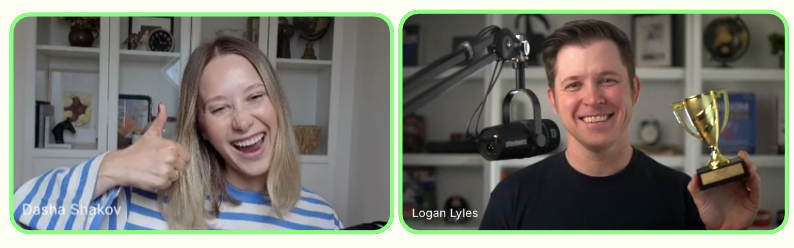
Logan Lyles thinks that’s the biggest missed opportunity in B2B webinars. He’s the founder of DemandShift, a done-for-you webinar agency, and he’s run nearly 100 webinars for B2B brands. He also won our Exit Five Live blitz session on webinars, and the chat was pleading for more, so Dasha brought him on the pod to keep it going. (Sidenote: He keeps the trophy on his bookshelf. His kids saw it come in the mail and rolled their eyes. Does anyone else feel like their family will never understand B2B marketing?)
His fix for the thank you page dead end is what he calls a two-step sign-up flow, and one client used it to book 30 demos from fewer than 250 sign-ups. Here’s how it works in 5 repeatable steps.
1. Catch Registrants At Their Highest-Intent Moment
Think about how you sign up for webinars. You see a topic you like and you register – you don’t even check the date. You’ll go if you can. If not, you’ll get the recording.
That’s why only a fraction show up live. But the moment they register is the highest-intent moment you’ll get. They’re telling you the topic is for them, and it’s enough for them to hand over their email and maybe an hour of their time. That’s 100% of your registrants at peak interest, and most teams send them to a dead end.
Logan’s approach is to keep the conversation going instead of just thanking them.
2. Make Registration Two Steps (But Don’t Call It A Survey)
Step one is the form you already have: first name, last name, email. Once they hit submit, they’re registered for the event.
Step two replaces the thank-you message with five or six questions. The trick is framing it as part of registration. Logan positions it as the next step: “Complete your free webinar registration by answering a few questions.”
Pass their email into a hidden field so your CRM ties the answers to the right person. Nobody wants to type their email twice.
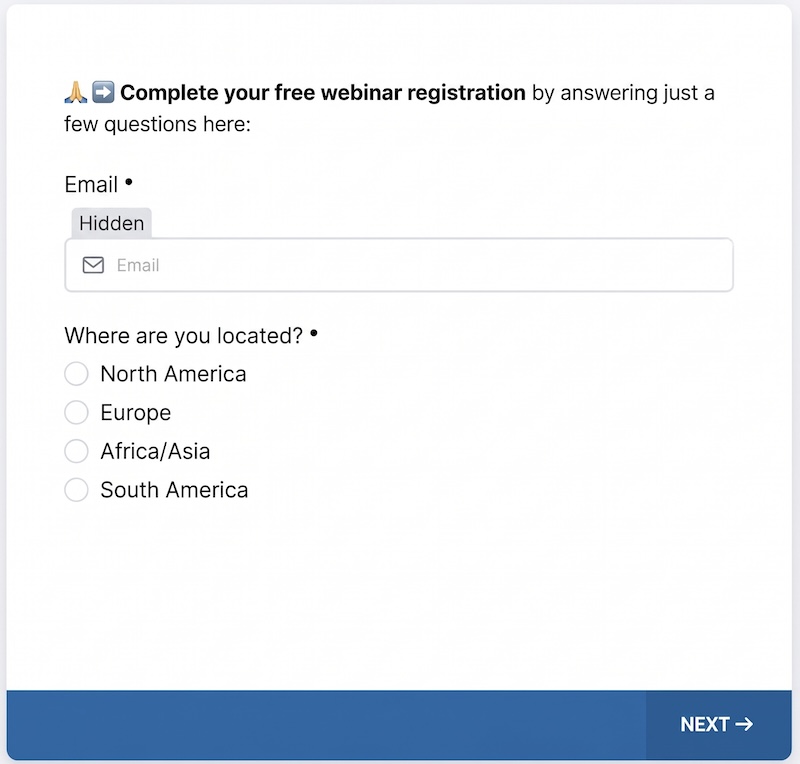
Now, you’re probably wondering if anyone actually fills this out. About 90% do, according to Logan. That’s held for 16 months across his clients, and even one skeptical client came in at 89.5%.
Splitting it into two steps is what makes this work. Obviously, short forms get more sign-ups and long forms get more info. This way you get both: the short form keeps registrations up, and the survey collects details that a long form would, without scaring anyone off.
3. Ask Easy Questions First, Then Get To The Pain
The survey has three jobs: get first-party data that shapes your content, qualify leads (great if you don’t have budget for enrichment), and agitate the pain before you make an offer.
Start easy: where they’re located, what best describes them, and company size. Then use the answer logic to skip questions. If someone says they run a company, skip job title, because they’re a founder or CEO. If a question won’t help you score, route, or follow up, cut it.
Then get to the pain. For one AI search client, that looked like:
- How confident are you that your brand shows up when buyers ask LLMs about your category?
- Which area feels like your biggest gap?
By the time someone answers those, they’ve told you exactly what they’re struggling with. Logan has had people tell him the questions left them primed and ready to book, which makes the final question an easy yes.
4. Make A Named Offer, Then Send Them Straight To The Calendar
The last question isn’t “want a demo?” It’s a named offer: a free 40-page customized GEO plan, plus a call to walk through it.
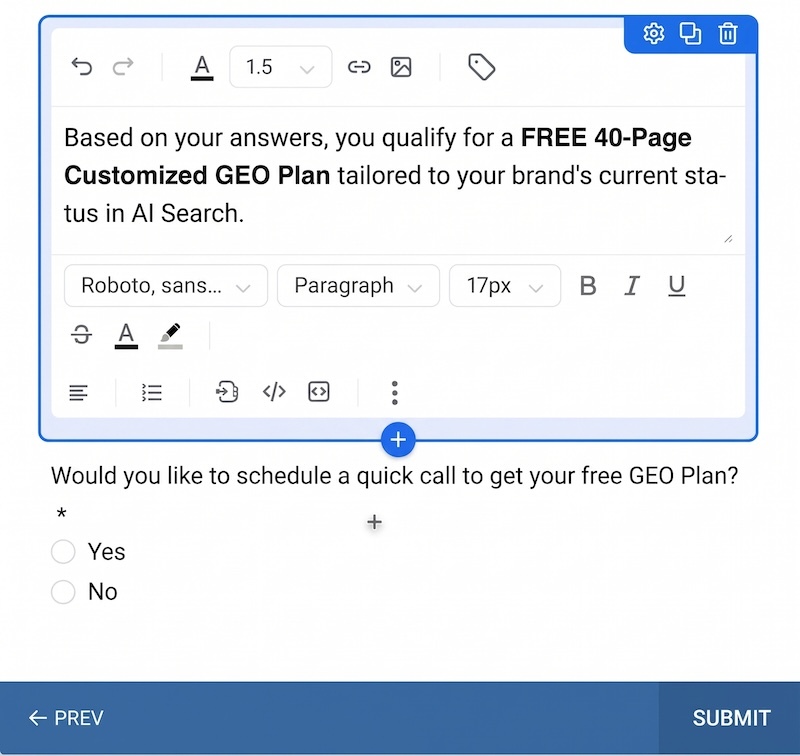
Say yes, and you land on a scheduling page immediately. There’s no “we’ll be in touch,” because speed to lead is key!
Pro tip: make the booking page title match the offer. Logan’s reads “Get your customized GEO strategy in minutes.” Some people will say yes and not book, so remind them what they said yes to.
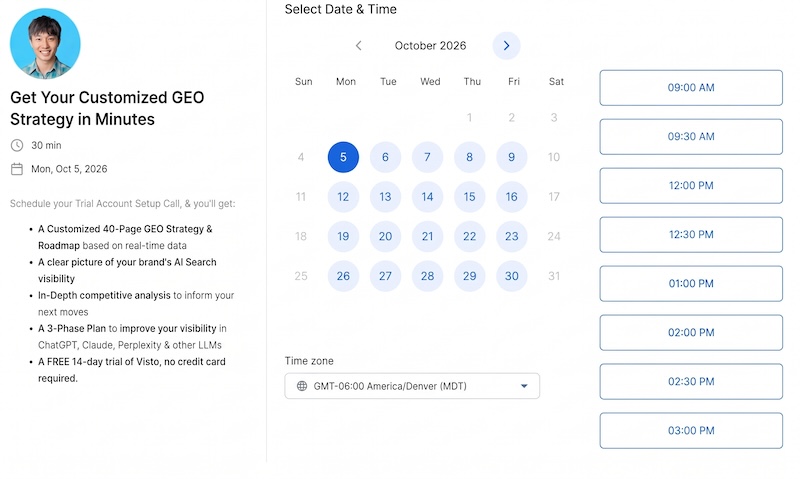
The question, the offer, and the booking page should all tell the same story. If any piece feels like a bait and switch, you lose them right before the finish line.
5. Book Demos Before Anyone Shows Up
This is how that client got about 30 demos from fewer than 250 registrants, and two-thirds of those demos were booked before the webinar even happened.
It’s a no-brainer. It doesn’t take much time, you collect valuable data on everyone who signs up, and you catch the people who were never going to show up live while they’re still interested.
Take this beyond webinars too. Logan runs the same flow behind research reports, ebooks, and templates. Once you’ve built it, you can reuse it almost anywhere you gate content.
None Of This Works If Your Webinar Sucks
One caveat here: a two-step sign-up flow can’t fast-track you past bad content. Treat the webinar like a product people actually want to show up for.
Create webinars worth attending. Then, make sure you’re not letting the highest-intent moment end on “Thanks, see you there.” This is just one of many webinar secrets Logan gave away on the Exit Five podcast. Check out the full interview for more actionable webinar plays you can run to drive more business value from every live show.
Frequently asked questions
What is a two-step sign-up flow for a B2B live session?
Step one is your normal registration form: first name, last name and email. Once someone submits it, they’re registered. Step two replaces the thank-you message with five or six questions, framed as finishing registration rather than as a survey, with their email passed through a hidden field so your CRM ties the answers to the right person.
Do registrants actually fill out the second step?
According to Logan Lyles of DemandShift, about 90% do. That rate has held for 16 months across his clients, and even one skeptical client came in at 89.5%.
What questions should the registration survey ask?
Start easy (location, what best describes them, company size) and use answer logic to skip anything irrelevant. Then get to the pain, like how confident they are their brand shows up in LLM answers. The last question is a named offer, such as a free customized plan plus a call to walk through it, not a generic “want a demo?”
How many demos can this approach book?
One DemandShift client booked about 30 demos from fewer than 250 registrants, and two-thirds of those demos were booked before the session even happened. Logan runs the same flow behind research reports, ebooks and templates too.