What I learned from 100 CMOs
6 Things I Learned From 100 Marketing Leaders in Arizona
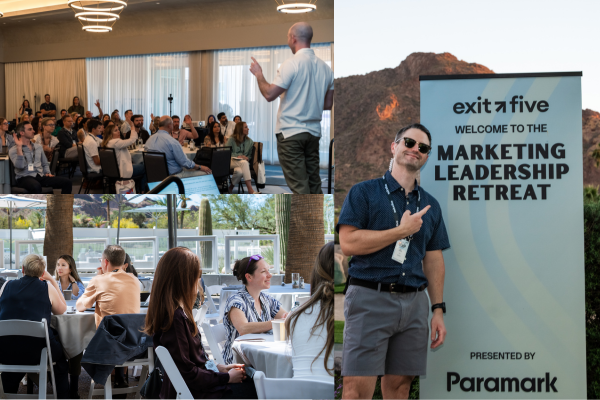
Last week we wrapped our first annual Marketing Leadership Retreat in Arizona. Not gonna lie, I was nervous about this one. Events are stressful. Travel has been crazy. It was 100 degrees unexpectedly this time of year. I was sick the week before. And I had to show my legs on stage after 8 months of winter in Vermont. Yikes.
But of course, it turned out GREAT. I can be my own worst enemy sometimes. The event ended up being the highest-rated event yet. 89 NPS, which beat Drive 2024’s score of 88. For context, anything above 70 is considered world class. Now the benchmark has been set for next year, and I’m sure we’ll go through the whole stress curve again…
ANYWAY: I’m writing you today because I wanted to do a little recap because the conversations were incredibly telling about what B2B marketing leaders actually care about right now and I am sure you’ll be reading this nodding along at home.
We took all the notes, feedback, reactions from our team, attendees, and I turned this into a little listicle (one that doesn’t suck I promise) with six key takeaways.
1. AI has shifted from hype to “prove it.”
A year ago the energy around AI was excitement. Now it’s pressure. And it scales with company size.
At $25M ARR, leaders are looking for quick wins they can show. At $600M, they’re wondering if they need to rethink how the entire marketing function operates. At any size company, it does feel like headcount is being scrutinized more than ever (fairly or not).
This is comforting though: the biggest thing I keep seeing is that there’s a massive gap between what people post about AI on LinkedIn and what’s actually happening inside marketing orgs. If you feel behind, you’re probably not as far behind as you think. Almost nobody has this figured out yet.
2. The most popular session had nothing to do with AI. It was about how to keep your job.
The median startup CMO tenure is only 18-24 months.
Dave Kellogg broke down exactly why and how to avoid becoming part of that statistic.
It was the most referenced moment of the entire event. I’m going to write a full newsletter on his session soon, but here’s the short version:
You must understand that the CMO actually has three jobs: to run marketing (that’s the baseline), to help your CEO run the company (aka think beyond your function and be an executive), and to “market marketing” internally. That last one kept surfacing all weekend. If leadership doesn’t understand marketing’s impact, that’s not their failure — that’s a marketing problem.
The line that got the biggest reaction: build a “Woodstein” partnership with your CRO, a mashup of Washington Post reporters Bob Woodward and Carl Bernstein, where the CEO sees you two as one unit, not two people fighting over pipeline credit.
The other favorite: when the board or another exec asks a question, answer it directly.
Board: “Which takes longer, the train or the bus?”
CMO: “Well, it depends. The train can…but the bus is…”
Answer the question directly. I love this. I’m already yelling at Dan about it. ANSWER THE QUESTION DAN. THE TRAIN OR THE BUS!?!?!
3. MQLs are dead.
The language has clearly shifted. Nobody wants to talk about MQLs anymore as a metric of success. In 2026 it better be all about marketing-sourced pipeline. ACV expansion and retention, not just new logos. If you’re still reporting on MQLs as your primary metric to your CEO, you’re speaking a different language than the rest of the room. The new standard is tying your work back to pipeline whether you like it or not. Simple, not easy.
4. You are not alone: everyone feels their team is too small for the job.
Multiple leaders described teams of “not enough people” responsible for demand gen, brand, events, PMM, content, and ops. With aggressive growth targets on top. If that’s your situation, it’s not a you problem. It’s structural across B2B right now. The leaders who are winning aren’t doing more things. There’s no secret. They’re doing fewer things better and saying no to the rest. Prioritization isn’t a nice-to-have skill anymore. It’s THE skill.
You might have to say no to YouTube right now, or be OK with not having a booth at SaaStr this year.
5. The top CMOs are doing the work once again. Hooray.
On the second morning at breakfast, I looked over and a table of 10 people all had their laptops open. Someone was leading an impromptu session on Claude Code, showing creative ways to use it, building things in real time. These aren’t junior marketers. These are CMOs and VPs running $50M to $500M companies.
The old playbook for a marketing leader was to sit in the ivory tower, set the strategy, and let your team execute. That’s changing. Whether it’s curiosity, fear of getting lapped, or just the fact that building things is fun again, leaders are getting hands-on. If you’re in a leadership role and you’re not experimenting with these tools yourself, you’re going to have a hard time leading your team through this transition.
6. The best moments happened between sessions.
Not during keynotes. At breakfast. At dinner. On the hike. One attendee said the most valuable part wasn’t any session. It was the sanity-checking. Being in a room full of people navigating the exact same chaos and realizing you’re not alone.
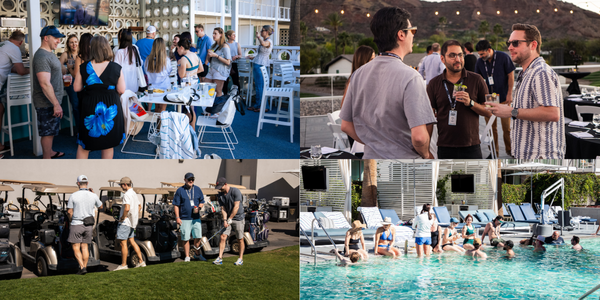
If you run events or offsites at your company, pay attention to this. Stop packing the agenda wall to wall. The conversations that happen at the coffee shop around the corner, on a walk between sessions, heck even at the pool or playing golf together. That was where I got the most value and heard the real truth. If you’re running events for your company this year, think about the gaps, not just the stage. People don’t want to sit in the basement of a Marriott all day being lectured.
Alright. That’s my list from our Marketing Leadership Retreat (aka MLR as we called it internally).
Anything stand out to you? What can you relate to? Reply back and let me know. Otherwise I’ll see you on Thursday for the next newsletter.
— Dave