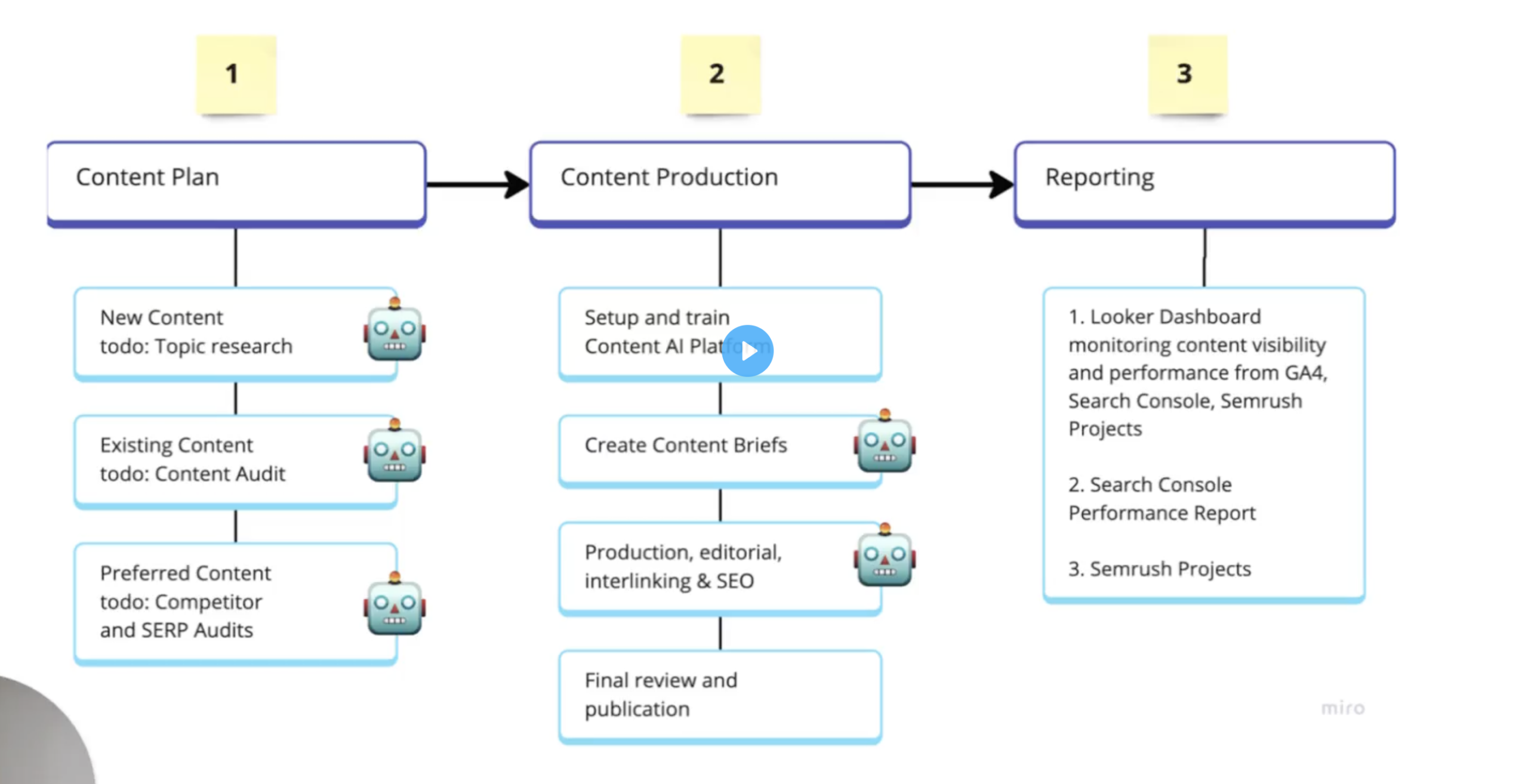
What’s Working in AEO Right Now
Does website traffic matter any more?
AI ate search. So any time you look something up now, even if you’re just doing it in the browser, you get an AI summary of the results. Or you might be like me, walking down the street talking to Claude (don’t judge me).
For years, we’ve used website traffic – and just the whole idea of being “everywhere online” – as a key part of the modern digital marketing strategy. You had to rank for keywords. Get found. Get links.
But what happens now? This is the whole topic of “AEO” aka answer engine optimization (the catch all term they are using for all the places; answer engine. So we don’t have to list out all the tools like Claude, Gemini, Perplexity, Bing, wait I just listed them all out…)
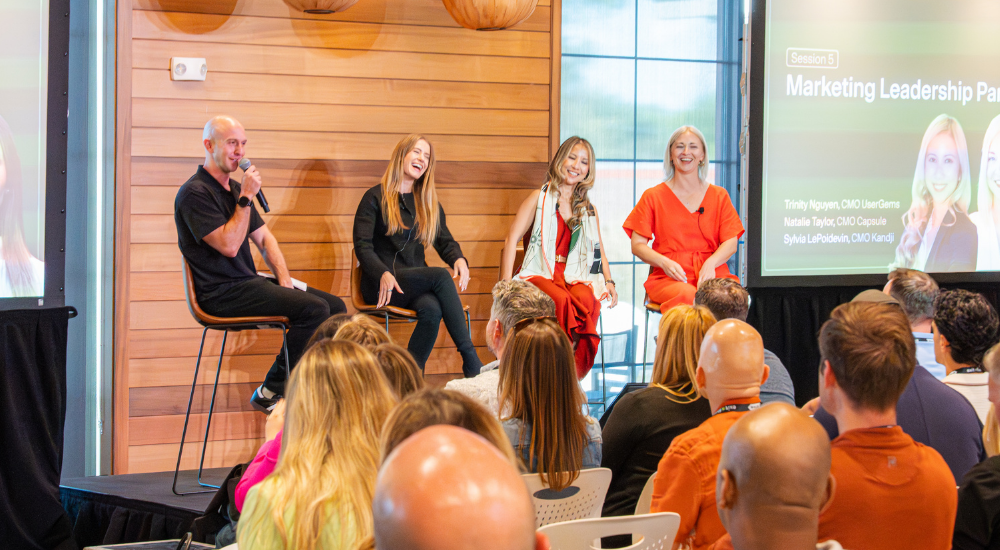
There are MANY questions about what matters with AI and search, so we ran a live session with a group of marketers sharing what’s working, what’s not, and what to do about it.
Matt Dzugan, VP of Data & Intelligence at Muck Rack. Jess Joyce, an SEO and AEO consultant who’s spent 15 years in this space. And Brett Domeny, Director of PM at Webflow, who’s been sitting at the center of this shift as it’s happened.
Here’s what stood out from each.
Sidenote: I know “what do we call this” is also a big debate among marketers right now, so we took a live poll at the start on what to call it. AEO beat out GEO, which beat out my submission EIEIO).
OK here are some highlights:
1. Muck Rack ran original research, pitched the right journalist, and showed up in ChatGPT answers ahead of their product launch.
Matt Dzugan is VP of Data & Intelligence at Muck Rack. They were launching a new product and wanted press coverage that would also earn them AI citations.
The play: run the prompts your ICP would actually ask in ChatGPT, pull the citations, and pattern-match to find which journalists your niche’s AI answers rely on most. In their niche (PR and communications), that turned out to be Eleanor Hawkins (some big wig journalist that matters to them) at Axios. They built a research report, pitched it to her, she covered it, and now Muck Rack shows up in ChatGPT when PR pros ask about AI and media strategy.
Anyone can do the manual version of this:
Think through the prompts that your buyers use (like how 10x a week I go into Claude and ask who has the best community for B2B marketers). Pull the cited sources and see whose byline keeps coming up: that’s your target list. Publish the research well ahead of your launch. The press cycle runs first, and the AI crawls and indexes that coverage. By the time you launch, you’re already showing up in the answers your buyers are getting. Then, sit back and launch into an audience that’s already primed for your offering.
Matt also had some input about unverifiable claims, like declaring you’re #1: LLMs build consensus. When every brand claims to be number one, the model ignores it because that’s not verifiable. What AI actually picks up are specific, checkable claims. Eg, we have this feature, they don’t. Not takedowns. Just verifiable facts about what makes you different. Point blank: don’t make things up.
Note: one of the most useful things on this topic came from the chat. A marketer named Daniel Hebert shared that he writes comparison content that includes his own product’s weaknesses alongside competitors’. Honest, specific, shows-its-work. Those posts, he said, get cited the most.
2. Your homepage is probably your worst page for AI discoverability. And the fix takes ten minutes.
Jess Joyce is an SEO and AEO consultant with 15 years of experience. She audited a batch of real B2B SaaS sites for the session and found 1 in 3 had technical blockers hurting their AI discoverability. Funny enough, the culprit is usually the homepage. the most fought-over page at any company, rewritten by the CEO (or worse, committee) multiple times a year, and it still ends up saying nothing clear about what the company actually does.
Her immediate fix: read your homepage title tag out loud. If it doesn’t say what you do and for whom, change it today. Also worth asking your dev team: is your site content in rendered HTML or loaded via JavaScript? LLMs don’t crawl JS the way Google does. If it’s JS-rendered, your content strategy is running on a foundation AI can’t read.
Bonus tip from Jess: sign up for Bing Webmaster Tools. It’s the only place right now where you can see first-party data on how your site is showing up in AI-generated answers. Directly from the source, not inferred from a third-party tool. Google hasn’t caught up yet, which means this is a free five-minute setup most of your competitors haven’t done.
3. Your buyers are asking AI questions about your category. Make sure your site has the answers.
Brett Domeny is Director of PM at Webflow, where he’s spent the last year working directly with marketing teams trying to figure out why their AI visibility wasn’t matching their SEO investment.
His overview simplifies the AEO issue: the shift from traditional search to answer engines isn’t a brand new game. It’s an evolution (and I love hearing someone say that btw; I am not an SEO expert but I am watching from the sidelines asking – isn’t this a lot like how it was before, but different?) Traditional search was about getting found so you could deliver the answer on your site. Answer engines skip the middle step. The answer just shows up. Which means if you’re not the one providing it, Reddit is. Some blog you’ve never heard of is. A competitor is.
Go pull your customer service tickets or chat transcripts. Ask: what are the top questions customers are asking about our product? Then, go look at your site and see if you answer them anywhere. If not, that’s the content gap to close first. Not a new campaign. Not a brand refresh. Just answer the questions your buyers are already asking in the places AI is going to look.
This is one of those things that sounds obvious until you do the exercise and realize how much your site talks about what you want to say versus what your customers need to know.
AEO doesn’t have to be complicated
None of these are big-budget plays. Muck Rack ran some prompts and pitched a journalist. Jess audited homepages and found most had a simple fixable problem. Brett’s approach to content gaps is something any marketing team can act on this week.