5 plays these B2B marketers said worked in H1 2026
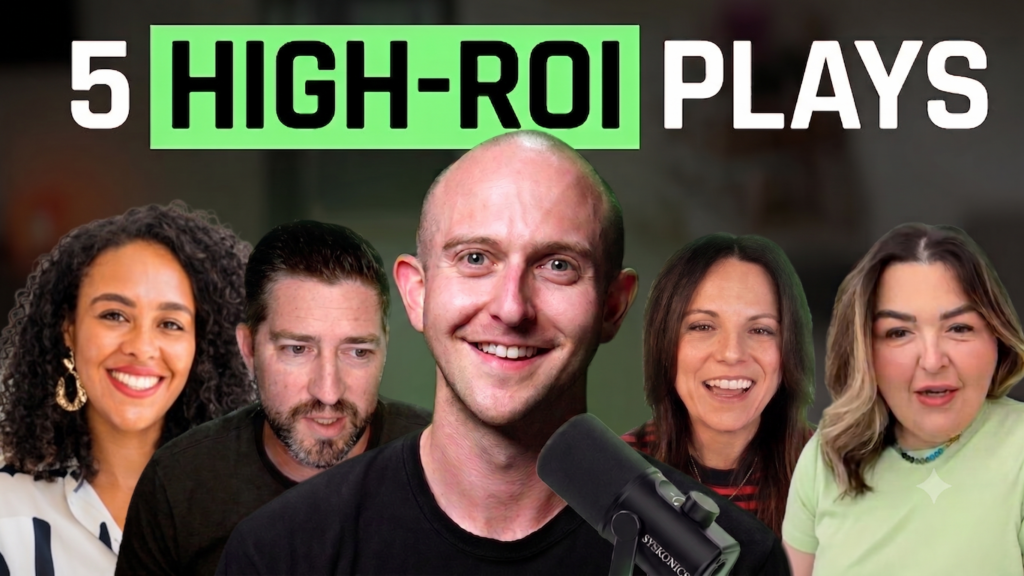
There’s a lot of hype right now about what’s possible in marketing. Our job is to help you understand what’s real by showing you real examples from real marketers. The number one thing we hear is: show me examples, give me ideas, give me inspiration, and that’s what we have for you today. I’m going into the 5 top plays from the B2B Blitz, as voted on by the live audience of 300 marketers.
1. The Winner: AE-starring video ads to warm accounts pre-outreach
Spud Rule, VP of Growth Marketing, Lendio
The play deep-dive: Most ABM still functions like glorified cold outreach – ads, emails, and events that don’t feel connected to each other. Spud’s fix is putting the actual AE who’ll run the deal in front of target accounts months before the first meeting, through long-form LinkedIn video where two AEs talk shop – no pitching.
How Spud runs the campaign:
- The anchor: Long-form LinkedIn video, but it’s two AEs just chatting, not a talking head, since salespeople love to talk to each other.
- How it scales: AEs paired to specific verticals, with founder-led content layered across the top as a broader, cold layer.
- Sourcing topics: Claude sorts Fathom recordings of real sales calls into problem, solution, and product buckets for ad ideas.
- Getting AEs on camera: Start with one, let the first few be rough, and let the results recruit the next one.
- Unexpected bonus: Marketing watching sales calls to build content makes reps feel like marketing is finally paying attention.
The results: 92% of engaged accounts had already seen an ad before outreach. One 10-minute video generated 5 discovery calls in two weeks on $4K spend.
2. “Comic strips” beat video clips 6X on LinkedIn
Jess Cook, VP of Marketing, Vector
The play deep-dive: Vector’s podcast clips were mobile-friendly and well produced, and still weren’t getting the reach Jess wanted. Her fix was swapping standard video clips for Instagram-style comic strips, screenshots strung into a few panels with captions, borrowing the format straight from how Amy Poehler promotes her own podcast.
How Jess does it:
- Find a moment from the episode with a punchline or epiphany, ideally one that opens with a question.
- Keep it to 2-4 scenes, 3 is the sweet spot for a real back-and-forth without feeling cramped.
- Grab screenshots where the facial expression matches the moment, not necessarily the exact word being said.
- Truncate text for clarity but stay close to the actual transcript, ending on a scene that lands like a punctuation mark.
- Export at 2316 x 3088 px so it reads well on both mobile and desktop.
A detail worth stealing: Yellow text on the captions consistently outperforms other colors (“I’m going to use green font to make it way different,” one attendee said in the chat, already planning their own version).
The results: 6X the engagement and impressions, plus tons of organic engagement in her feed.
Jess dropped her own Canva template in the chat so you can build these yourself.
3. Trigger-based messaging framework for any vertical
Diane Wiredu, Founder, Lion Words
The play deep-dive: At the $10M to $50M stage, messaging for a complex product selling into multiple industries isn’t a copy problem, it’s a decision problem: what to actually say and in what order, made worse once you add a layer of different verticals with different needs. Diane’s fix is mapping the actual buying trigger per vertical, the real-world event that sent a prospect looking for a solution in the first place, instead of the usual pain-point exercise.
How Diane does it:
- Built for: Complex product suites selling into multiple segments, though it applies to more horizontal B2B companies too.
- Core move: Identify the actual buying trigger per vertical, the real-world event that sent a prospect looking in the first place, instead of the usual pain-point exercise.
- Mapping it: That trigger connects to a buying lens (how the committee actually evaluates), a must-have outcome, and an entry point message.
- Pharma example: A failed regulatory inspection or product recall shifts the whole message toward audit trails and accuracy for a risk-averse buying committee.
- The input rule: Real messaging interviews, not generic “tell us about the product” calls (“go talk to your customers and buyers,” as one attendee put it in the chat).
The result: Aligned, on-brand messaging her teams could reuse across assets well beyond the homepage.
Diane is offering to answer questions on the framework directly, find her on LinkedIn.
4. Connect Claude Code to the LinkedIn Ads API
Anthony Blatner, Founder, Speedwork
The play deep-dive: Managing LinkedIn Ads well, pacing budgets, cleaning demographics, applying exclusions, eats hours every week, and LinkedIn doesn’t even give you a change log to reference. Anthony’s fix is skipping the pre-built MCPs and connecting Claude Code directly to the LinkedIn Ads API for full read and write access, automating everything from bid pacing to competitor ad scans.
How Anthony does it:
- Setup: Connect Claude Code directly to the LinkedIn Ads API for full read and write access.
- Guardrails: A human approves every budget change in Slack, Claude respects API rate limits, and it logs its own changes so it can learn from them.
- Demographic scans: A monthly pass flags spend going to mismatched job titles or industries, skipping small-spend noise like second jobs on profiles.
- Bulk exclusions: Applied across every campaign at once instead of the painful one-by-one process LinkedIn normally forces past 10 campaigns.
- Competitor scans: A quarterly SWOT pull on competitor ad creative, using a third-party scraping tool, to flag messaging angles worth stealing.
Setup requires a free LinkedIn developer app (roughly 1-2 days for approval).
Anthony dropped the full step-by-step tutorial and a YouTube walkthrough in the chat, plus his Claude Code slides.
5. A revenue-driven approach to campaign planning
Hailey McDonald, VP of Revenue Marketing, Sprout Social
The play: Most campaign plans start with what marketing is doing, not who they’re selling to, which turns targeting into an afterthought and ROI into something explained after the fact instead of something you planned for. Hailey’s fix is building a segment-by-solution matrix weighted by revenue signals, so budget gets built top-down from the actual revenue target instead of spread evenly across campaigns.
How Hailey does it:
- The matrix: ICP segments on one axis, solutions on the other, each combination weighted by a revenue signal.
- Who builds it: Rev Ops and Product Marketing alongside marketing, not marketing alone.
- The math: each segment gets a percentage of the total pipeline goal, so a segment weighted at 48% of a $100M goal should be traceable to $48M.
- The catch: probability-adjusted pipeline, not just raw pipeline, is what surfaced a blind spot in her highest-spending segment.
- The fix: reallocated spend into underweighted segments instead of continuing to pour budget into the loudest number.
Hailey’s results: 120% of pipeline goal hit, spend efficiency up 40%.
Hailey shared her full slides in the chat. Feel free to connect with her on LinkedIn to jam out on this topic.
Claude can’t replicate this format. No offense Claude (love you!). There’s just a lot of hype right now, and our job is to keep the focus on what’s real. That’s the bet we’re making with our Live Sessions, and our community.
If you liked these plays, good news: all of the Blitzers are workshop leaders at Drive, our big annual event this September in Stowe, Vermont.
Which of these plays are you stealing first? If you want to see this format live, we’re running it back this Friday and this time we’re focusing 100% on Ads. What’s working with Paid ads right now? Join the Paid Ads Playoff: Proven B2B Plays That Turn Spend Into Pipeline. Yes, we’ll share the recording but you have to sign up.
Frequently Asked Questions
What was the winning play at B2B Blitz, voted on by marketers?
The top-voted play came from Spud Rule, VP of Growth Marketing at Lendio: put the actual AE who will run the deal in a long-form LinkedIn video months before outreach starts. It worked – 92% of engaged accounts had already seen an ad before being contacted, and one 10-minute video generated 5 discovery calls in two weeks on $4K in spend.
Why did Vector’s comic strip posts outperform video clips on LinkedIn?
Jess Cook, VP of Marketing at Vector, swapped standard podcast video clips for Instagram-style comic strips made of screenshots strung into a few panels with captions, a format borrowed from how Amy Poehler promotes her own podcast. The swap drove 6X the engagement and impressions versus video clips, plus more organic reach.
What design details make Vector’s LinkedIn comic strips work?
Jess Cook keeps each comic strip to 2-4 scenes, with 3 as the sweet spot, and picks screenshots where the facial expression matches the moment rather than the exact word spoken. She exports at 2316 x 3088 px for mobile and desktop, and found yellow caption text consistently outperforms other colors.
What is Diane Wiredu’s trigger-based messaging framework?
Diane Wiredu, founder of Lion Words, built this for companies at the $10M to $50M stage selling complex products into multiple verticals. Instead of the usual pain-point exercise, she maps the real-world buying trigger per vertical, then connects it to a buying lens, a must-have outcome, and an entry point message, such as a failed regulatory inspection steering pharma messaging toward audit trails.
How did Anthony Blatner connect Claude Code to the LinkedIn Ads API?
Anthony Blatner, founder of Speedwork, skipped pre-built MCPs and connected Claude Code directly to the LinkedIn Ads API for full read and write access, automating bid pacing, monthly demographic mismatch scans, bulk exclusions across every campaign, and quarterly competitor ad scans. A human still approves every budget change in Slack, and setup requires a free LinkedIn developer app taking roughly 1-2 days to approve.
What results came from Hailey McDonald’s revenue-driven campaign planning approach?
Hailey McDonald, VP of Revenue Marketing at Sprout Social, built a segment-by-solution matrix weighted by revenue signals so budget is built top-down from the actual revenue target rather than spread evenly. After reallocating spend based on probability-adjusted pipeline, her team hit 120% of pipeline goal with spend efficiency up 40%.