5 battle-tested webinar tactics for B2B Marketing
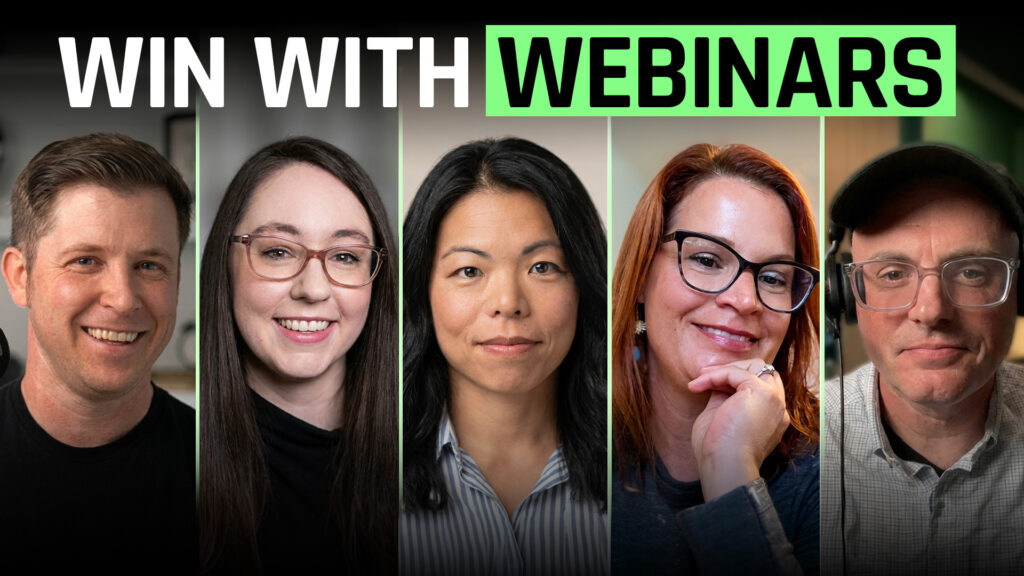
No, these aren’t just made up ideas from the Exit Five team. Each of these plays have already been proven by actual marketers, so you know they work (we got receipts). A preview of what’s in store: a registration flow that 5x’d conversions, how to automate content repurposing, creating compounding results with a format change, and more from pros at companies like AirOps and CaliberMind. Hear from the source what worked and what didn’t, evaluate what’s missing from your webinar toolkit, pick one of these plays to try out, and get to work.
1. How a 2-step registration flow can 5x your conversions
Logan Lyles, Founder, DemandShift
Demand Shift runs webinars as a service for B2B clients and has surveyed 250+ marketing teams to benchmark conversion rates.
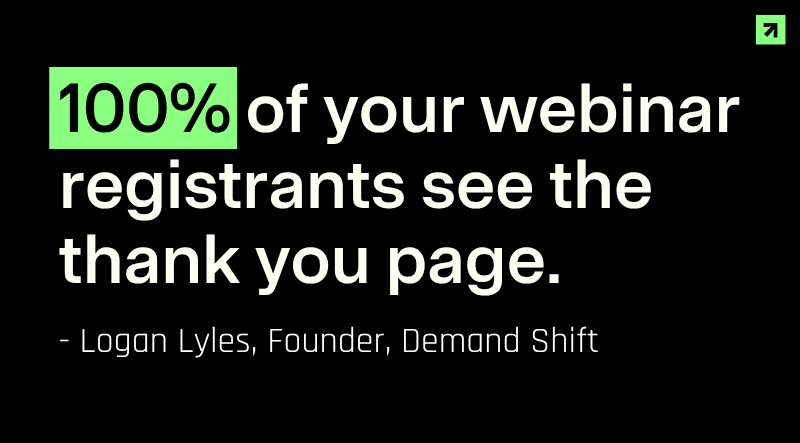
Most B2B webinar campaigns convert under 2% to a next step. Meanwhile the one thing 100% of registrants actually see, the thank you page, is treated as a throw away. Logan has a solution for that: turn that dead end into a qualifying survey.
The mechanics:
- Redirect after signup: registrants land on a 5-8 question survey before the webinar even happens, not just a “you’re registered” page. The language that tested best: “Complete your free webinar registration by answering a few questions here.”
- Ask only what you’ll use: skip anything you could get through enrichment (like a LinkedIn URL), and cut any question that won’t actually shape someone’s follow-up.
- Build in branch logic: different questions and offers depending on how someone answers earlier in the flow, so the survey feels personalized instead of like a generic form.
- Keep it two steps, not one: the survey lives on its own page, not bolted onto the signup form, with the email passed through as a URL parameter so it feels like a continuation. That’s why over 90% complete it in Logan’s experience instead of dropping off.
- End on an outcome-based CTA: skip “book a demo” and offer something tied to the result someone actually wants, and only surface it once they’ve qualified.
- Any stack works: Logan has done this with Unbounce and Typeform stitched into HubSpot, and more recently as an all-in-one build in HighLevel. Mechanics matter more than tools.
The results: a 5x increase in conversions, with completion rates up to 94%. Some clients now book more calls before the webinar than live or after, and the survey data doubles as segmentation for follow-up even when someone doesn’t convert.
2. Make it easy: borrow an audience and automate content repurposing
Josh Spilker, Head of Search Marketing, AirOps
AirOps is a growth platform for AI search, and Josh runs the company’s webinar program.
Cold-starting an audience and building content from scratch is slow and expensive. Josh’s answer: borrow someone else’s audience, then automate everything downstream of the recording.
The mechanics:
- Pick a guest with a real point of view: no generic “tell us about yourself” conversations here. Josh looks for influential types with proprietary research to share and mines their past newsletters, talks, and LinkedIn posts to find it before reaching out.
- Match their audience to your ICP: Josh once partnered with Kyle Poyar, whose Growth Unhinged newsletter reaches 100,000+ marketers who overlap heavily with AirOps’ own buyers.
- Promote across every channel you’ve got: In Josh’s case, Meta and LinkedIn paid ads (Meta ran a lower cost per lead), the company’s owned HubSpot email list, and Luma for event registration and reminders.
- Automate repurposing end-to-end: the transcript and landing page copy run through an AirOps workflow that generates takeaways, email copy, a Luma recap email, newsletter copy, and social posts, plus content for the site and YouTube descriptions. A human always reviews before anything is published.
The results: about 900 registrants, roughly 250 live attendees, a 28% show rate, which Josh says beats the average attendance rate for most webinars. One session fuels a full slate of repurposed content.
3. Turn your webinar program into a series so results compound, not reset
Mary Batchelder, Director of Revenue Marketing, CaliberMind
CaliberMind is a martech platform that helps B2B revenue teams tie marketing activity back to pipeline.
With only two people in marketing, treating every webinar like a one-off sprint doesn’t scale. Mary’s approach: don’t start from zero every time, and build a series that compounds instead.
How she does it:
- One registration, one series: sign up once and you’re covered for the full series, no re-registering for each episode.
- Host on your own site: Mary uses Sequel – not a third-party platform – so attendees on are their domain, surrounded by CaliberMind content.
- Promote through channels that compound: third-party communities and publications drove the most cost-effective registrations, alongside owned email sends, organic social posts from thought leaders on the team, and spotlight ads.
- Automate the operational load: registration emails, reminders, calendar invites, and post-event thank yous all run without her touching them, so her time goes into the content, not logistics.
- Repurpose with AI: she generates as many clips as her webinar platform allows from each session, picks the best ones, and pulls the transcriptions for social and blog content, turning 30 to 40 hours of recordings into a running content pipeline.
The results: 900 registrants, 500 live and on-demand attendees, over 1,000 hours watched, 80 opportunities influenced in under a year, and 25% of all revenue touched by the series. Plus an industry award.
4. Rank your leads and personalize the handoff so MQLs turn into pipeline
Caroline Ang Wright, Head of Marketing, Fazeshift
Caroline ran this play on a three-person team at AidKit, a Series A govtech startup that sells a cash assistance platform to governments and humanitarian orgs for disaster relief.
Their two webinars generated MQLs but zero pipeline, so she decided to change the format and lock down the handoff before running webinar three.
The how:
- Swap the format: instead of another customer case study, run a fireside chat on a hot topic in your industry with a notable guest as the draw. Caroline landed a former FEMA administrator and AidKit board member to talk about shifting FEMA guidance, with live Q&A as the incentive to show up live.
- Lean on your network for the guest: check your board and advisors first, they’re usually more accessible and more credible than a cold outreach to an outside expert.
- Bet on owned channels: organic social, email, and their homepage banner drove the highest volume and quality of registrants. Paid search underperformed since most searchers weren’t in their ICP, while LinkedIn paid outperformed Google at roughly 13x less cost.
- Secure sales alignment in advance: every lead gets picked up the same day or next day by an AE – no later – agreed on with leadership before the webinar runs.
- Build a prioritized attendee list: people who engaged in Q&A or chat first, then target accounts, then the rest of the ICP.
- Personalize the handoff: enrich each attendee record with persona and segment data, then reference what they actually asked or watched instead of a generic “great to connect” note. Caroline has since built this into three AI agents that enrich, match, and personalize automatically, though a spreadsheet done by hand works too as needed.
The results: a 50% live show rate, 45% of attendees in their direct ICP, a 50-minute average watch time on a 60-minute session, and just under $1M in pipeline in the first week.
5. Structure your series like a conference so no single session has to carry the full weight
Christina Campbell, Director of Marketing, Treasury4
Treasury4 is a Series A fintech founded by former treasury leaders out of Microsoft, Salesforce, and Tableau.
Christina had a small team, no existing content engine, and a mandate to establish AI credibility fast. Her approach: borrow the format of an in-person conference and run it virtually, on a cadence.
How to run it:
- Structure it like a conference: keynotes, product announcements, technical deep dives, client and industry voices, panels, the same components you’d expect at a live event.
- Spread it out: instead of jamming everything into one blitz day, sessions run across a cadence so people can actually tune in over time instead of committing to a full day.
- Lead with a clear mandate, not a pitch: her hook is that every CFO wants their treasury team using AI but has no idea where to start, so the content is built to be accessible and gives people a guided structure whether or not they use the product.
- Let the teaser prove the demand: she posted a registration page with zero agenda and no speakers listed, and still racked up signups before she had anything concrete to promote.
- Test channels early and reallocate fast: LinkedIn paid didn’t perform, so she moved that budget into live prizes, think $300 airline gift cards, Airbnb credit, and cash, to keep engagement high during sessions instead.
- Repurpose everything: every session turns into clips, newsletter content, and thought leadership posts to keep building the content engine that didn’t exist prior.
The results: 75+ registrants on a teaser page with zero agenda posted, 370+ attendees enrolled across the series, and pipeline influence more than doubled quarter over quarter. Email and organic outperformed paid social and LinkedIn ads.
Webinars still crush. If they’re not working for you or something’s broken, it’s likely time to try something new. These five marketers already did the hard part – now steal the plays and get the results for yourself. All that’s left is picking one and running it at your company.