How to use AI to create good content

How to Use AI in Your Marketing Without Creating AI Slop
Confession: I’m using AI tools every day now. Despite my resistance, despite the worry that I’m rotting out my brain and losing the ability to think for myself. Despite the fact AI always tells me I’m right! I know! Writing, brainstorming, drafting decks, landing pages, images. I actually can’t imagine doing marketing without it at this point.
And you’re using it too if you’re reading my newsletter. We all are. But nobody’s exactly shouting about it. You’re not putting “written with Claude” in the footer of your blog post. Because we all know the fear: what if it (gulps) reads like AI? What if it sounds like every other piece of content flooding the internet right now, written by a very enthusiastic robot with a thesaurus? (you should see some of the LinkedIn comments I get these days).
That fear is worth paying attention to though. Because your audience hasn’t gotten more patient. They still have short attention spans, low appetite for being marketed to, and a nose for content that feels … off. AI didn’t change the bar. The bar was already high because of the “digital marketing content explosion” over the last 10 years. So the question isn’t whether to use AI for content – it’s how to use it and still be good.
Eoin Clancy, VP of Growth at AirOps, was on my podcast recently and shared some insights that stuck with me about content and AI slop. Here’s what he said.
1. You need to find your “Content IP”
This is the big one. If your content is just a repackaged version of whatever’s already on the first page of Google, it’s slop. Doesn’t matter if a human wrote it or a machine did. The problem isn’t the tool. The problem is you didn’t bring anything new to the table.
Eoin calls it “information gain.” I think of it as your Content IP: the proprietary information, data, and expertise that only your company has access to. Your Gong calls, your product usage data, your customer conversations, the questions your sales team hears every week that nobody else is writing about.
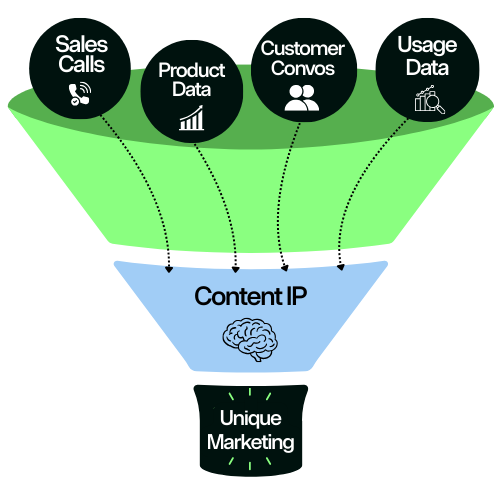
And this is the part most marketing teams miss: great Content IP usually doesn’t live in marketing.
It lives in product, engineering, sales, customer success. Ramp is a great example right now. They sit on millions of credit card transactions and they turn that proprietary spend data into insights nobody else can publish. Reports on which software categories are growing, how companies are actually spending, what’s shifting quarter over quarter. They’ve created this report that goes viral every time the new data comes out now. That’s a marketer’s dream. But that’s not content you can generate with a prompt. It’s original research built on first-party data.
The best content comes from the data and expertise already inside your building. Marketing’s job is to find it (get the product team to unlock it, please) and turn it into something worth reading.
2. Have a point of view, not just a cute brand voice
Eoin’s second indicator: if someone on your team reads the content and doesn’t say “this sounds like us,” you’re in trouble.
But I’d push it further. It’s not just about having a consistent voice or some cute way of writing so everyone can recognize your copy. It’s about having a point of view. A position your company takes in the market that comes through in everything you publish.
Ryan Narod, VP of Marketing at Rippling, was on my podcast recently and they are doing a great job here. Rippling has a voice you’d recognize anywhere. It’s sharp, competitive, a little confrontational. Their newsletter names alone tell you something: “I’m Telling HR,” “The IT Factor,” “Spendsetters.” They publish engineering deep dives about migrating Python dependencies. They publish press releases about lawsuits against competitors (OK maybe that one is an outlier). But none of it sounds like it came from the same machine that’s writing everyone else’s SaaS blog. That’s not just brand voice. That’s a company with a clear POV.
If you stripped the logo off your last five blog posts, would anyone know it was you? If the answer is no, creating content with AI isn’t the problem.
3. Please go and clean up the AI tells
This one is smaller but it’s the thing people notice first. Em dashes everywhere. Words like “utilize” instead of “use.” Subheadings that follow the exact same pattern every time. That weird recap paragraph at the end that summarizes everything you just read. That damn rocket emoji! Why.
Side note: I’m reading this book “Stoner” by John Williams right now that a friend recommended to me. Published in 1965. Full of em dashes. Must have been written by AI.
Eoin’s point is that these aren’t always signs of bad content on their own. But stacked together, they trigger something in the reader.
Even kids can spot it. I’ve shown my kids videos and they immediately say “that’s AI” without being able to explain why. There’s a feel to it. And your audience has developed the same instinct.
The fix is simple but it takes discipline: read the output out loud. If it doesn’t sound like something you’d actually say to a colleague, rewrite it until it does. And if you can’t take the time to read the copy you’re putting out to your audience – why do you think you’re worthy of their attention?
4. Build something like a living marketing brain
Here’s what ties it all together: this idea of a marketing brain (oooooo, the brain). The companies doing this well have invested in capturing how they sound, what they believe, and what good looks like in a real, usable system. Not a brand guidelines PDF that lives in a Google Drive folder nobody opens. Something you actually use every day. This is one of the most practical uses of AI beyond the hype right now.
Eoin’s seen companies feed their best-performing content into AI tools and ask them to extract the patterns. What words do we use? What’s our sentence structure? Where’s the humor? Where are we serious? The output becomes a living reference that evolves as the company evolves.
We did this at Exit Five and we’re constantly updating it with customer stories, copy we like, testimonials, feedback from the community. Just yesterday I got a message on LinkedIn with a quote I liked; so I went into our Claude Project and updated our instructions (we have a whole social proof doc). It helps us standardize how we write across every channel. And when a new teammate joins, they can start writing like us immediately. Need to get a webinar invite email out tomorrow? The style guide gets them there without three rounds of edits. Someone is out on vacation? No problem. We all know how to use our writing system.
The key is it’s never done. You treat it like a product, not a project. It gets better every time you use it. Maybe this is what they meant when they were talking about “prompt engineering.”
Anyway: the companies winning at content right now aren’t the ones avoiding AI. I think that’s missing the point. Arguing over whether AI did it or not. The opportunity is to do something like Ramp and create this amazing resource with first party data. Or go create some new version of a quarterly report or unique content series .. be the next thing I reference in this newsletter.
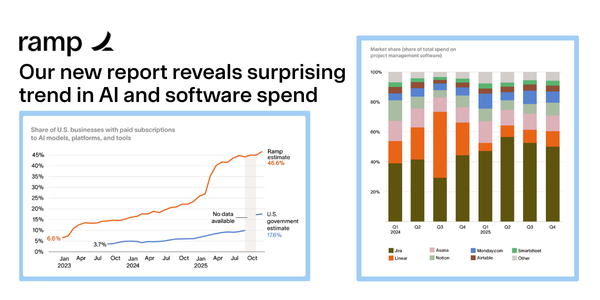
Ramp’s latest report released in February
How are you using AI in your content workflow right now?
Hit reply, I want to hear what’s working (or not).
— Dave
PS. I realize it’s not that easy, to just go get the data. But the bigger point is how can you influence that type of effort inside of your company? Show them that you can do great marketing with something like this… then go use all of your AI on top of that…