Why B2B Companies Should Have a Mascot
A few weeks ago, we featured Louis in a guest newsletter about his audit of 100 B2B brands, scoring each one on how distinctive they actually are. Out of that sample, only one company landed in the ownable band: Wiz. We got into the full research on the pod, but today I’m zooming in on one piece of it: Mascots.
Louis didn’t build his scoring system from scratch. He leaned on material like Jenni Romaniuk’s research and book, “Building Distinctive Brand Assets.” Her findings, based on decades of studying how memory is built: mascots and human characters score extremely high on both being noticed and recalled, right up there with sound (for example, five notes and you know it’s the McDonald’s jingle). These concepts are not just creativity and art, they’re proven psychology that B2B has mainly overlooked.
I think this matters more than ever. We’re all swimming in AI generated sameness: the same content, decks, polished-but-forgettable everything. When every brand has access to the same tools, those that go out of their way to be a little weird and memorable are the ones that cut through. A mascot is one way to do that.
It’s a big choice, a daunting project. Here are a few tips from Louis from our recent convo as you consider whether a mascot makes sense for your brand.
1. Almost no B2B brands have a mascot, so having one instantly sets you apart.
Louis pulled Census data showing the number of B2B SaaS companies at around 30,000. He went looking for how many have a mascot of any kind. 103, or about 0.34%.
In evaluating mascots, here’s how Louis’s scoring worked.
- Louis rated each brand’s assets on a 0 to 3 scale, and mascots or human characters averaged 0.73, the lowest of any asset category he measured.
- 0 or 1 means there’s basically nothing there, no character, no face, nothing memorable to lock onto.
- 2 or 3 means the asset shows up consistently enough that someone could describe it without seeing your logo. Only 14% of companies cleared this bar.
In short, most B2B brands are not taking advantage of the benefits of mascots.
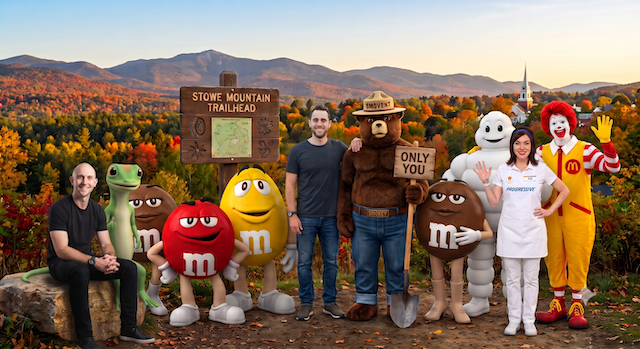
Compare that to the consumer world. The Geico gecko. Ronald McDonald. Mr. KoolAid. Progressive’s Flo. Instantly recognizable, because those companies picked one image and never let go.
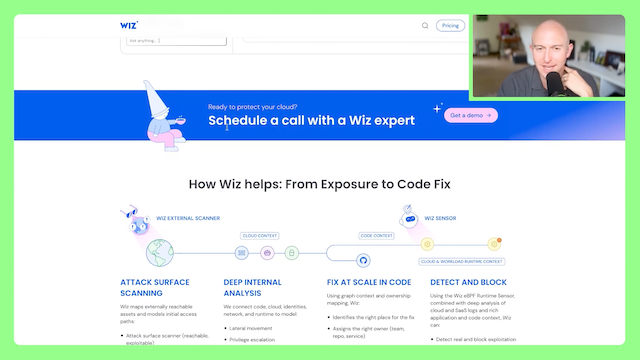
In Louis’s study, Wiz was the highest scorer of the entire thing, 19 out of 24, the only brand that landed in the ownable band. The gnome mascot is part of why, but not all of it. Their CTA doesn’t say “get a demo,” it says “schedule a call with a Wiz expert,” with the gnome sitting right next to it, like the gnome is the expert you’d actually be talking to.
Wiz’s blog images all use the same pastel blue and pink palette, and their product diagrams have a consistent “magic wand” visual style.
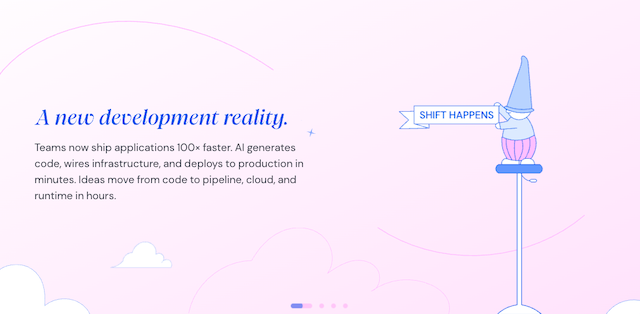
These assets aren’t groundbreaking on their own. Wiz applies them everywhere, with complete consistency, which is what makes a brand ownable.
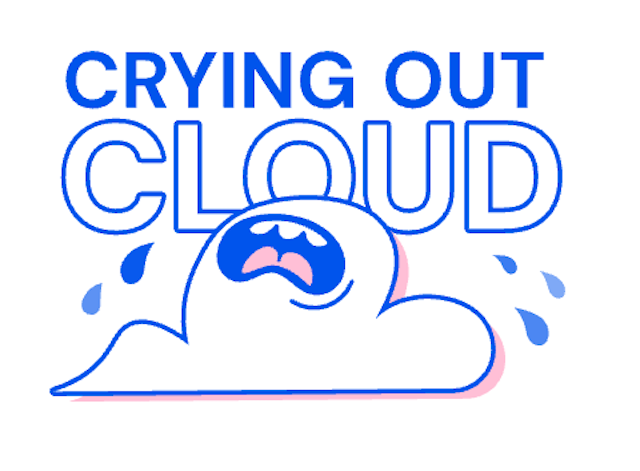
And Wiz didn’t stop at a mascot. They built an entire podcast brand, “Crying Out Cloud,” around it, with its own jingle.
2. Go all in on one weird asset, so you’re distinctive instead of just polished.
Mutiny’s mascot is a raccoon. Apparently, their CMO was working with an agency on the brand identity and said something like, we’re scrappy, let’s pick an animal mascot that suits that, something willing to go to extremes to survive. The raccoon fit, especially given no one else would ever dare put a raccoon on a B2B homepage.
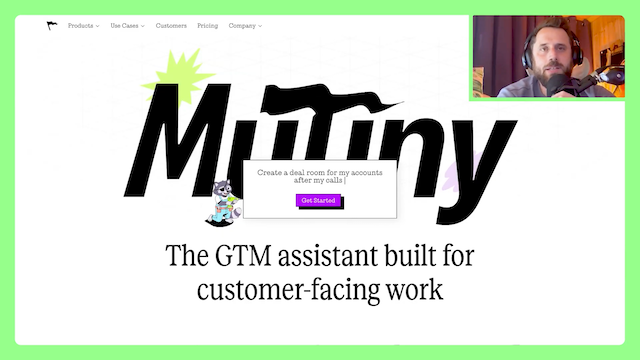
Mutiny’s raccoon isn’t just a logo, it’s on the homepage doing the job the product does.
The raccoon isn’t just prospect-facing, it shows up inside the product itself. The difference between a logo and a brand decision.
3. Commit long enough for it to stick, or you’ll never get the payoff.
Louis has a word for why most B2B brands never get here: glut. Marketers second-guess, seek approval, and/or lose patience with an idea before it’s had time to land. Some of that is timing. Brand work doesn’t show up in next quarter’s numbers, distinctive assets compound over years. It’s risky. You have to commit before you can prove anything, which is uncomfortable for anyone with something to lose (all of us…).
The raccoon could have been a squirrel, a whale, it doesn’t even matter. What matters is picking one thing and sticking with it. Keep changing and you never let anything build.
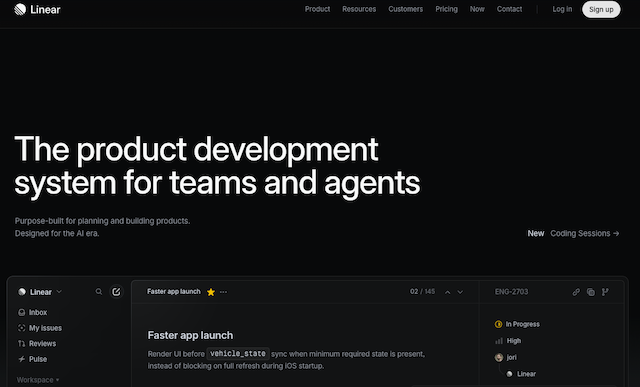
Linear has no mascot. Same principle, different approach: one sharp, unmistakable visual identity, applied everywhere.
A mascot is one way to be distinctive, but it’s not the only way, and it’s not always the easiest place to start. Linear’s approach shows a lower-lift version of this concept: no character, no animal, just a visual identity applied consistently. (I wasn’t sure about this one, but upon further inspection, Louis pointed out…)
– A distinctive wireframe sphere logo mark
– Their near-black aesthetic (they were early to do this, and now many have caught up)
– Vocabulary like “a new species of tool,” and manifesto-style content that opens with lines like “issue tracking is dead.”
Louis explained that it’s not that nobody has done any of these individual things before. It’s that they picked a lane and went at it with total intensity, including a CEO who’s vocal on LinkedIn, which helps too. No raccoons. This is attainable.
4. Ship your idea instead of letting it die in Slack.
Getting buy-in for something like this is hard unless you’re the founder or a top exec. (Nobody gets fired for buying IBM, right? But you will get fired if you spend six months and a big agency budget on a mascot that doesn’t move any KPIs.) You’re at risk either way, so you might as well take the swing.
Louis encourages asking for forgiveness, not permission. Skip the pitch meeting. If you can: run a test, launch a new set of creative in one LinkedIn campaign, compare it to what you’re already running, and bring back the results instead of asking for a vote up front.
And if a few people on your team hate it, don’t treat that as a stop sign. Louis says the opposite is the real red flag: if everyone in the room loves an idea immediately, it’s probably too safe to actually work.
Guess I’ll go find out. I’m sketching a cartoon version of myself right now, bald head and all, holding a microphone.
Or I’ll Venmo you $20 if you can come up with the funniest E5 mascot. Make me prove it…
P.S. Louis will be speaking at Drive in September. Get your tickets here.